A bakery needs more than a sack that survives delivery: the package must suit flour volume, lifting routines, storage humidity, food-contact requirements and dust control. By comparing bag materials, capacities, barriers and inspection points, you can decide when a flour bag is practical and when a smaller pack or bulk-handling system is safer.
Key takeaways
- Match bag size to your mixer loading method and staff handling limits.
- Use a moisture-resistant inner liner and strong stitched or heat-sealed seams.
- Specify food-contact compliance, migration documents and odour-free materials.
- List dimensions, paper or woven fabric, closure, printing and load requirements.
When does a flour bag suit a bakery’s actual workflow?
A flour bag suits a bakery when it fits the route from delivery pallet to mixer, not merely the way a mill fills it.
Flour packaging bags for bakeries work for receiving bulk flour, holding an opened supply briefly, moving flour to mixers or sifters, and transferring stock to another production site when staff can control lifting, dust release and resealing.
Use a sack when your process includes:
- A dry receiving area where staff empty bags without dragging them across the floor. Flour dust is combustible, so provide housekeeping and a controlled tipping method.
- Pallet space that keeps bags off the floor and away from walls, leaks and chemicals.
- A defined closure or isolation method for partly used bags, such as a sealed liner, clamp or lidded bin.
- Equipment that reduces manual lifting, including a trolley, hoist or flour-transfer system.
A flour mill or distributor may move sealed pallets mechanically; a bakery often opens and lifts each unit by hand. That changes the specification for bulk flour packaging.
| Option | Better choice when | Main drawback |
|---|---|---|
| 25–50 kg sack | Daily consumption is high and pallet or transfer equipment is available | Greater lifting risk and more flour exposed during opening |
| 5–10 kg food-service pack | Staff handle small batches or bags repeatedly | More packaging, openings and receiving units |
| Rigid lidded container | Flour sits open for extended periods or needs frequent small-batch access | Requires cleaning, space and an unloading step |
Choose a smaller pack or rigid container when staff lift sacks repeatedly, production uses small batches, or opened flour remains exposed for long periods.
Which bag construction protects flour from moisture, odours and leakage?
For flour bags for bakeries, the complete construction matters more than the outer material. A woven polypropylene outer sack resists tearing, abrasion and pallet stacking, but it is not automatically moisture-proof. A separate polyethylene liner forms the principal internal barrier when its seams and closure are properly sealed.
| Option | Protection and trade-off | Best use |
|---|---|---|
| Multiwall paper | Stiff and easier to send through a fibre-recovery route; unlined paper resists liquid water and high humidity poorly. | Dry, short-term handling, or use with a barrier liner |
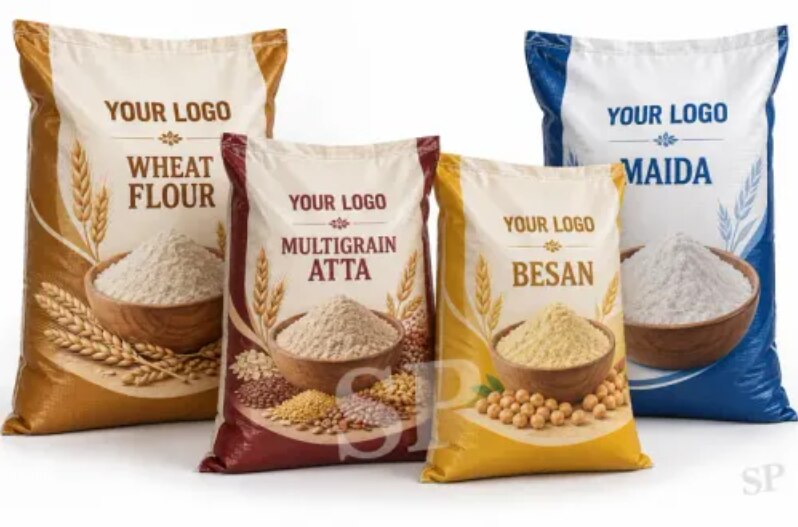
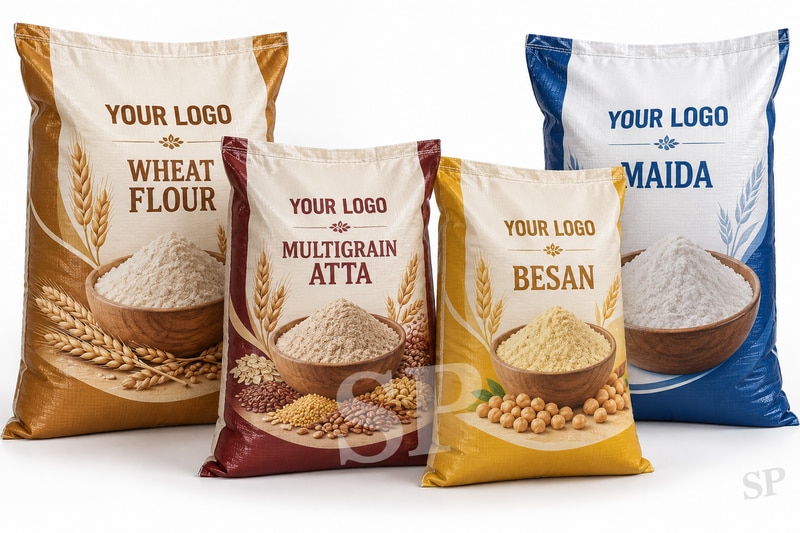
| BOPP-laminated woven PP | A continuous printed or protective film covers the woven fabric, improving surface protection and print durability. | Bulk bakery packaging bags needing strong handling and a cleaner outer surface |
| Plain woven PP | Strong and economical, but vapour can enter through fabric, seams or closures. | Dry storage with controlled humidity and careful handling |
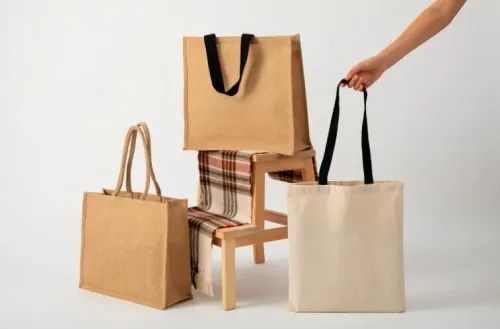
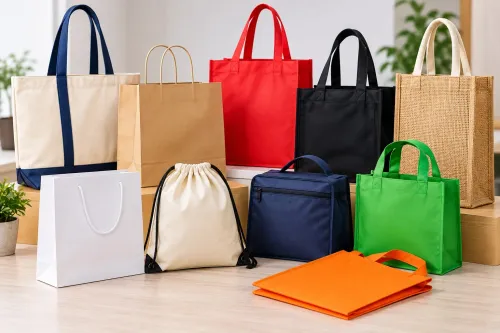
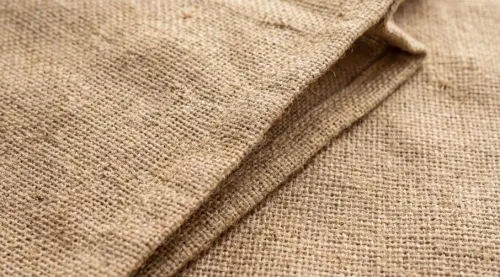
| Jute with liner | Reusable and presentable as an outer bag; untreated jute is porous and does not prove direct-contact suitability. | Secondary, promotional or reusable outer packaging |
| Lined construction | The sealed polyethylene liner supplies the main moisture and odour barrier. | Longer storage or flour exposed to humid conditions |
Keep every bag on pallets, away from walls, chemicals and standing water. Repair roof or plumbing leaks, rotate stock first-in-first-out, and inspect for pest entry and flour dust accumulation.
Odours pass through some materials, while pests exploit pinholes, open mouths and damaged seams. No outer sack compensates for a poor stitch, pasted seam, closure or torn liner. Choose the liner and closure together, then check filled samples for leakage before adopting the construction.
Should a bakery choose 5 kg, 10 kg, 25 kg or 50 kg bags?
Choose the smallest bag that keeps handling safe without creating constant opening and replenishment work. The right size depends on daily flour consumption, pallet dimensions, mixer location, storage space and how long an opened bag remains exposed.
| Capacity | Labour and production effect | Best fit |
|---|---|---|
| 5 kg | Easy lifting, but more units, waste and opening events | Small bakeries and recipe-level replenishment |
| 10 kg | Middle ground for frequent manual handling and limited storage | Moderate output with short movement distances |
| 25 kg | Fewer units and faster receiving, but assess two-person lifting or trolley use | Many production bakeries with pallet storage |
| 50 kg | Lowest unit count, but difficult and hazardous for solo handling | Mechanised tipping, palletised storage or controlled bulk transfer |
A 25 kg or 50 kg sack that is dragged, lifted or tipped manually needs different specifications from one emptied through equipment. Check local workplace rules before making 25 kg routine; never treat a 50 kg sack as a solo-lifting format.
Rated capacity must account for flour density, fill tolerance, seam strength and stacking height. A bag that holds 25 kg nominally can fail if the seam, pallet pattern or stack load does not match the filled weight.
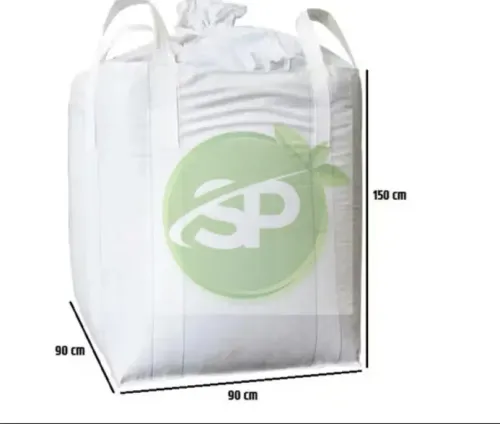
FIBCs, or flexible intermediate bulk containers, suit bulk flour packaging only when the safe working load, safety factor, lifting loops and discharge spout match the bakery’s equipment and emptying cycle. ISO 21898 provides requirements and test methods, but it does not choose the working load for you.
Compare flour bags for bakeries against actual labour, dust control, storage time and production speed—not capacity alone.
Can the bag touch flour safely, and how should you specify it?
No. A strong or natural-looking sack is not automatically safe for direct flour contact: a jute or cotton outer fabric proves neither food-contact compliance nor a clean internal barrier. For flour packaging bags for bakeries in India, apply the Food Safety and Standards (Packaging) Regulations: require food-grade, clean, hygienic packaging suitable for the intended use.
- Request documents for the finished contact layer, not only the outer fabric: a food-contact declaration, migration test or applicable regulatory authorization, liner material and thickness, ink formulation, adhesive, odour status and intended flour-contact conditions.
- Keep printed surfaces away from flour unless the supplier documents direct-contact use and controls ink set-off. Ask how the ink dries, because transferred ink can contaminate the liner or flour.
- Choose the closure with its leakage risk in mind. Stitched seams can leak through needle holes or skipped stitches; pasted seams can open when damp; heat-sealed liners need an unbroken seal; tie closures need secure folding and handling.
- Before accepting a shipment or batchwise production run, inspect filled samples for pinholes, seam gaps, skipped or weak stitching, liner folds, delamination, odour and dampness. Gently invert and handle each sample; reject it if flour escapes.
Keep receiving areas clean and dry, remove spills promptly, and maintain housekeeping around tipping and emptying. Flour dust is combustible, so dust control protects hygiene and reduces fire or explosion risk.
What should you put in a purchase specification before ordering custom bags?
A purchase specification turns “strong, attractive bag” into requirements a supplier can produce and you can inspect. Record the following before requesting a quotation:
- Capacity in kilograms, filled-bag dimensions, woven fabric and denier
- Fabric or laminate basis weight, liner material and thickness
- Seam and closure type, safe working load, stacking pattern and pallet size
- Reuse expectation, food-contact documents and odour limits
- Print colours, artwork approval, batch identification and delivery inspection criteria
Tie each field to the bakery’s actual route. A bag tipped beside the mixer needs different controls from one unloaded by pallet and opened through a hopper.
| Handling route | Specify | Failure prevented |
|---|---|---|
| Manual lift to mixer | Lower working load, manageable dimensions, secure closure | Strain, dragging and dropped bags |
| Pallet storage | Filled dimensions, pallet pattern and stacking height | Leaning stacks and seam stress |
| Controlled bulk transfer | Safe working load, lifting loops and discharge design | Unsafe lifting or uncontrolled emptying |
Custom printing must leave clear space for net quantity, packer or manufacturer details, lot or batch number, and date-related or other declarations required by the sale format. A decorative sack does not replace compliant labelling.
For custom flour bags in Nagpur, give the supplier your unloading-to-mixer route, monthly volume, storage conditions and lifting method before choosing material. SP Jute Craft Enterprises can be considered, but compare documented construction and inspection samples rather than a general strength claim.
Flour bags suit a bakery when capacity, barrier, contact evidence and handling controls match the workflow.
Related product
 | FOOD & INDUSTRIAL PACKAGING # Flour Packaging Bags Manufacturer & Supplier – SP Jute Craft Enterprises Looking for **strong, durable, and attractive flour packaging bags** for... View product → |
Frequently asked questions
When does a flour bag suit a bakery’s actual workflow?
Choose a bag that fits storage space, pallet handling, weighing, opening and mixer loading. A bag is unsuitable if staff must drag it through narrow aisles, lift it above a safe working height or transfer flour through a difficult opening.
Which bag construction protects flour from moisture, odours and leakage?
Use a construction with a moisture-resistant inner liner, secure seams and a closure that prevents flour escape. Test the packed bag for seam leakage, odour transfer, punctures and exposure to humid storage conditions before placing a bulk order.
Should a bakery choose 5 kg, 10 kg, 25 kg or 50 kg bags?
Select 5 kg or 10 kg bags for smaller batches and easier manual handling, 25 kg for higher-volume use where staff and equipment support the load, and 50 kg only when your receiving and handling system is designed for it.
Can the bag touch flour safely, and how should you specify it?
Ask for a food-contact-grade material and a written declaration of compliance, supported by migration-test documentation for the intended flour contact. Also specify that the bag has no objectionable odour, loose fibres, ink contact or exposed adhesives.
What should you put in a purchase specification before ordering custom bags?
State filled weight, bag dimensions, material layers, liner type, seam and closure, stacking conditions, moisture barrier, food-contact documents, print requirements, tolerances, sample approval and delivery quantity.
Keywords