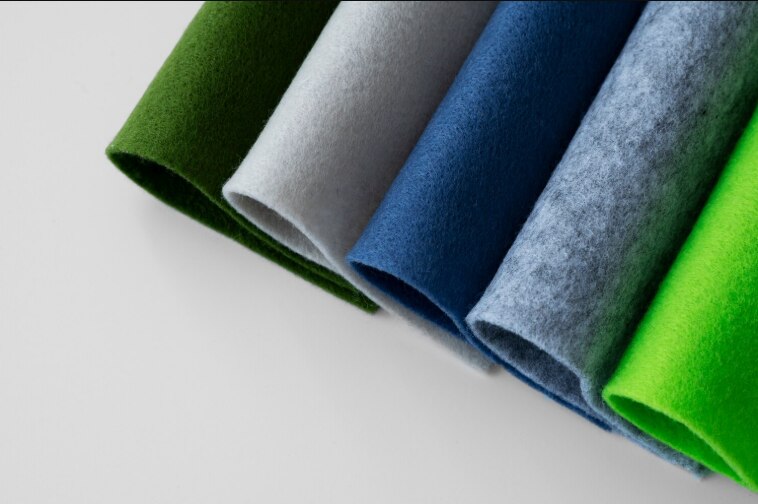
Felt can separate polished surfaces, soften contact between parts, reduce handling noise and conform around irregular components, but its performance depends on fibre, construction, density and compression recovery. By the end, you will be able to compare felt with foam, paper, jute and corrugated materials, specify a usable packaging grade and evaluate bulk supply conditions in Nagpur.
Key takeaways
- Match wool, polyester, polypropylene or jute-blend felt to the job.
- Choose thickness from load, clearance, abrasion and cushioning requirements.
- Use felt for surface protection, but choose foam or corrugated board for impact absorption.
- Check supplier samples, roll dimensions, GSM, tolerances and bulk-order consistency.
Which felt specification fits your packaging job?
Choose the fibre and construction by the job, not by thickness alone. Wool offers warmth and resilience; polyester gives consistent strength, colour and moisture resistance; polypropylene is lightweight and moisture-resistant; and a jute-blend adds natural fibre character but needs tighter moisture and lint controls.
| Option | Construction or characteristic | Best fit |
|---|---|---|
| Wool felt | Dense natural fibre structure with good resilience | Premium surface protection and insulation |
| Polyester felt | Synthetic fibre with stable dimensions | Repeatable pads, liners and dividers |
| Polypropylene felt | Lightweight, moisture-resistant synthetic | Damp-prone packaging and separators |
| Jute-blend felt | Natural-fibre blend with a textured surface | Sustainable presentation and moderate-duty protection |
| Woven felt | Fibres arranged as warp and weft yarns | Applications needing directional tensile and tear strength |
| Needle-punched felt | Nonwoven; barbed needles mechanically entangle fibres | Die-cut pads, wraps, gaskets, dividers and liners |
Needle-punched felt fabric for packaging does not behave like woven fabric: it lacks the same directional tensile and tear performance. Its felt fabric benefits include conformability and easy conversion, but industrial felt needs controlled tolerances rather than craft-grade consistency.
Put these purchasing details on the specification sheet:
- Fibre composition and construction method
- GSM, density, and thickness measured under a stated pressure
- Roll width, sheet dimensions, and dimensional tolerances
- Colour options and colourfastness test requirement
- Compression-deflection data and compression-recovery or permanent-set limits
Request a pre-production sample and approved master swatch. For repeat orders, record lot identification and define whether quantity means net usable area or gross roll area.
What felt protects against—and where other materials work better
Felt works best when the failure you fear is scratching, surface-to-surface contact, low-level vibration, handling noise, edge contact or an irregular shape. Its cushioning is gentle rather than structural: fibres conform around contours, separate parts and provide limited thermal and acoustic insulation.
| Material | Strongest use | Where it works better or worse |
|---|---|---|
| Felt | Separators, wraps, pads, irregular parts and noise reduction | More storage volume than thin paper; can lint, retain dust and oil, absorb moisture, and compress permanently |
| Corrugated board | Stacking, carton structure and edge protection | Better load-bearing structure; weaker around curved surfaces |
| Bubble wrap | Lightweight impact and abrasion buffering | Better quick wrapping; less stable as a separator under load |
| EVA foam | Reusable pads and controlled cushioning | Better resilience and moisture resistance; less conformable in some shapes |
| Polyurethane foam | Impact absorption for fragile goods | Better severe-impact cushioning; can tear or take compression set |
| Kraft paper | Void fill and low-cost surface separation | Better storage efficiency; little vibration damping |
| Cotton waste | Wiping and loose fill | Cheaper for rough handling; inconsistent, linty and difficult to control |
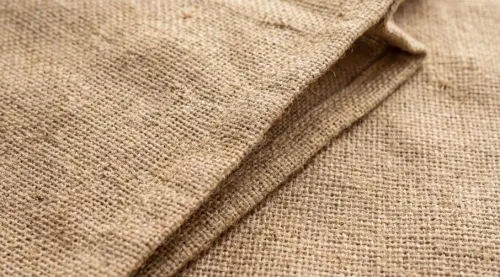
| Woven jute | Tough wraps and breathable separators | Better tensile durability; rougher surface and less precise cushioning |
These felt fabric benefits do not make felt a universal protector. Severe impact needs engineered cushioning tested for the load, while thin paper wins when warehouse space matters.
Untreated natural fibres can absorb moisture during Nagpur’s humid or monsoon storage. Specify synthetic fibre, low-lint conversion and protective bagging for precision parts; inspect for grit, because contamination can scratch polished surfaces.
Felt is not automatically antistatic, waterproof, flame-retardant or oil-resistant. Require test evidence for each claim, and never substitute felt for engineered cushioning when bottoming out or permanent compression would damage the product.
How to use felt fabric for packaging and select thickness
Use felt fabric for packaging as a fitted barrier, not a default cushion: select thickness and density from the part, load, contact area and handling condition. A thick, low-density felt can bottom out; a dense, thin grade can protect a finish but fail to absorb impact.
- Line carton walls and corners to stop movement and reduce abrasion.
- Wrap finished parts individually, especially painted, polished or coated surfaces.
- Cut dividers to keep components from touching during handling.
- Insert base and lid pads where vertical pressure or stacking reaches the part.
- Add padded bases or sleeves inside reusable containers for repeated loading and unloading.
| Packaging method | Main purpose | Detail to control |
|---|---|---|
| Lining | Separation and noise reduction | Secure edges so the felt cannot fold into the product |
| Wrapping | Surface protection | Use low-lint, clean material; remove trapped grit |
| Dividers | Preventing part-to-part contact | Match cell size to the component |
| Base or lid pads | Distributing contact pressure | Check compression under the loaded part |
| Sleeves | Protecting irregular or reusable-pack surfaces | Confirm fit after repeated use |
Test a filled-pack sample, not a loose swatch. Request compression-deflection data at the expected load and thickness, then check recovery or permanent set after repeated loading. Inspect the pad for bottoming out, visible crushing or exposed contact points.
If transit testing is specified, confirm the drop sequence and pressure conditions under ISTA 3A, ASTM D5276 or ASTM D4169 before approving the design.
When felt suits industrial parts, machinery and reusable transit packs
Use felt for separators, sleeves and dividers around metal components, tools, glass, painted parts and irregular machinery shapes. It prevents surface-to-surface contact, reduces handling noise, damps limited vibration and provides modest thermal insulation.
It is not a substitute for engineered impact cushioning: heavy drops, sharp shock loads or high compression require tested foam, molded pulp or another protective system.
For polished, coated or painted surfaces, specify:
- Low-lint, low-odour material with clean conversion and batch traceability
- Protective film or individual bagging where grit could become trapped
- Oil-, water- or chemical-resistance matched to the part and storage environment
- Moisture, mould and dust controls for returnable packs
- Static-control performance when handling electronics, powders or ignition-sensitive components
- Temperature limits and fire-test evidence when heat, sparks or enclosed machinery are involved
Ask an industrial felt fabric supplier for compression-deflection results at the actual load, repeated-loading recovery and permanent-set data. A thick felt can bottom out under a heavy component or stay compressed between return trips.
Do not approve felt for filtration from GSM or thickness alone. Fibre diameter, pore structure, permeability, pressure drop, dust loading and particle-size efficiency determine filter performance; request application-specific test data. For reusable transit packs, inspect and clean the felt between cycles, because absorbed oil, water and dust can transfer contamination to the next part.
How to evaluate a felt fabric supplier in Nagpur for bulk orders
Approve a pre-production sample before placing a bulk felt fabric India order, then retain the signed sample as the master swatch. Test the actual cutting, stitching, friction fit or lamination process, not just an uncut sheet.
Your purchase sheet should name fibre composition, construction, GSM, thickness under stated pressure, density, colour, colourfastness and dimensional tolerances. An industrial felt fabric supplier should distinguish controlled industrial material from craft-grade felt and provide compression-recovery and lot data where required.
- Quote net usable area, excluding edge damage and splice losses; do not accept gross roll area as the delivery basis.
- Record roll width, roll-length tolerance and the maximum permitted number and length of splices.
- Assign a lot number to every roll and require that number on the invoice, labels and test records.
- Define rejection: reject material outside GSM, thickness, width or colour limits, and any roll with mould, water damage, unidentified lots or excessive splices.
| Control | Write into the order | Failure prevented |
|---|---|---|
| Packing | Sealed moisture-protective wrapping; protected roll ends | Wet, dusty or mould-affected felt |
| Storage | Off the floor, away from walls, leaks and direct water | Wicking and warehouse contamination |
| Inspection | Equilibrate rolls before measuring after transport | Condensation-driven dimensional disputes |
During Nagpur’s monsoon, ask the felt fabric supplier in Nagpur for warehouse humidity guidance. Keep rolls off the floor, prevent condensation, and allow them to reach room conditions before dimensional inspection or converting.
SP Jute Craft Enterprises is one local option to ask about felt pads, sleeves or dividers integrated with jute bags and woven industrial packaging; confirm each material’s measured performance rather than treating conversion capability as a rating.
Related product
 | JUTE FABRICS PRODUCT DETAILS : Fashion & Accessories 👒 o Hats, caps, handbags, shoes, jackets o Decorative accessories (badges, brooches) • Craft & Decorative... View product → |
Frequently asked questions
Which felt specification fits a packaging job?
Select fibre and construction according to the required strength, moisture resistance, lint control, resilience, appearance and handling conditions—not thickness alone.
What does felt protect against, and where do other materials work better?
Felt protects surfaces from scratches, rubbing, dust and light abrasion. Foam works better for impact cushioning, while corrugated board provides stronger structural separation and stacking support.
How should you choose felt thickness for packaging?
Base thickness on the part’s weight, available clearance, contact pressure, abrasion risk and required cushioning. Test the packed item through handling and transit conditions before ordering in bulk.
When does felt suit industrial parts and reusable transit packs?
Felt suits components that need surface protection, separation, wrapping or repeated handling, especially when the pack will be opened and reused. Specify moisture, lint and cleaning controls for the operating environment.
How do you evaluate a felt fabric supplier in Nagpur for bulk orders?
Request samples and confirm fibre composition, GSM, thickness tolerance, roll or sheet dimensions, colour consistency, edge quality, packing method, lead time and repeat-order controls.
Keywords