The right branded bag depends on what it must carry, how many times it will be used, and how the printed design will survive handling. By comparing use cases, materials, construction, artwork, ordering terms and actual quantity needs, you can select a bag that supports both packaging performance and brand visibility.
Key takeaways
- Use paper for one-time carryout and reusable fabric bags for repeated customer use.
- Specify load, dimensions, handles, seams and testing before requesting quotations.
- Keep logos readable with high contrast, adequate size and artwork suited to the material.
- Approve a physical sample before calculating the full order quantity.
Choose the bag by the branding job, not by the material name
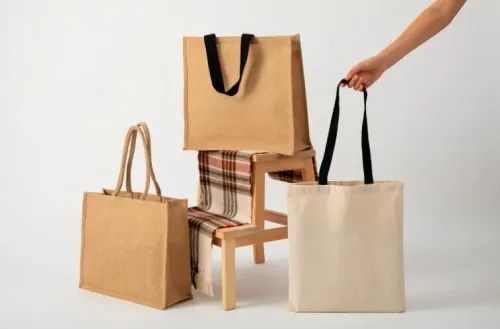
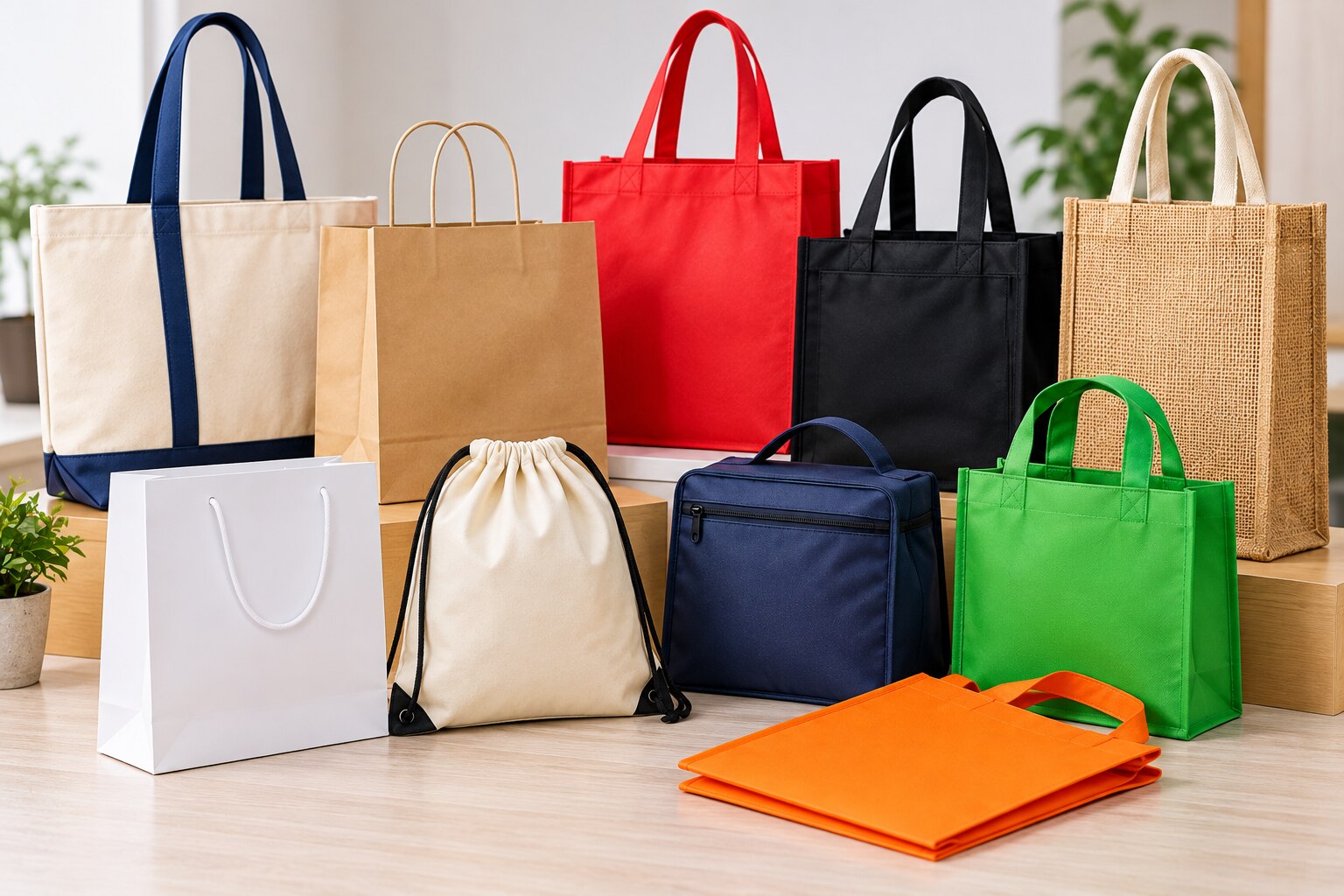
A one-time retail carryout usually calls for a paper bag: it gives a clean, controlled branding moment without asking the customer to store it. Repeated customer use calls for jute, cotton or canvas; choose these when recipients will carry them on commutes, shopping trips or office visits.
| Option | Best branding job | Branding trade-off |
|---|---|---|
| Paper | One-time retail purchase or a clean product launch handover | Low material use and neat presentation, but the logo may be seen once and wet strength is limited |
| Jute, cotton or canvas | Repeated customer use or a corporate gift | A larger print area and repeated exposure, but the heavier bag creates value only if the recipient keeps and uses it |
| Non-woven | High-volume event distribution | Lightweight, compact to store and economical at scale, but less premium and less likely to become a daily bag |
A launch can justify paper for a single presentation or reusable fabric for post-launch visibility. A corporate gift usually benefits from cotton, canvas or jute when the bag suits the gift and feels worth retaining. Non-woven bags fit conferences where thousands of attendees need a carrier quickly, not campaigns built around long-term use.
Select custom promotional bags or paper shopping bags by campaign objective, expected filled weight and number of uses—not the lowest unit price.
Custom promotional bags for companies deliver greater branding value only when their construction survives the contents and the recipient actually reuses them; a heavier reusable bag that stays in a cupboard produces less exposure than a lighter paper bag used once and disposed of correctly.
Match material, size and construction to the product inside
Choose dimensions from the packed product, not the logo. Measure the item’s width, height and depth, then add clearance so the bag closes without crushing contents. A 35–45 cm handle suits hand carry; choose 60–75 cm for shoulder carry, and attach it with stitched tabs, rivets or folded-and-glued paper patches rated for the filled load.
| Material | Reuse, load and moisture | Storage, appearance and print | Disposal route |
|---|---|---|---|
| Paper | Low to moderate reuse; lower wet strength and limited load tolerance | Folds flat, clean retail appearance, broad print area | Recyclable in suitable paper streams; coatings and lamination complicate recycling |
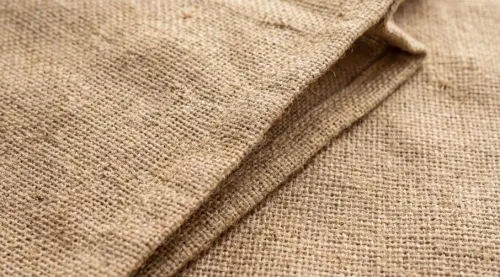
| Jute | Reusable and suitable for moderate loads; absorbs moisture and needs dry storage | Bulky, textured natural appearance, uneven print surface | Fibre recovery or disposal depends on construction and local facilities |
| Cotton | Reusable for light to moderate loads; poor protection from prolonged moisture | Folds compactly, soft appearance, good print area | Textile reuse or recycling where accepted |
| Canvas | Higher reuse and load capacity; absorbs water unless treated | Heavier storage volume, premium appearance, strong print area | Textile reuse or recycling where accepted |
| Non-woven polypropylene | Reusable for moderate loads and handles moisture better | Packs flat, broad print area, less premium appearance | Plastic recycling only where facilities accept it |
Match construction to the contents:
- Give bottle packs a reinforced base and a gusset deep enough to keep bottles upright.
- Use a wide, stable bottom for bakery boxes and upright dimensions with moisture protection for takeaway containers.
- Give folded garments a broad opening, books a flat base with comfortable flat handles, and boxed gifts a close-fitting size that prevents movement.
Paper shopping bags for branding are not automatically more sustainable: a low-material bag can fail when wet, while a heavier branded business bag creates value only when reused. Test the filled bag, including handle attachment and base, before ordering.
Write a performance specification that the finished bag can pass
A purchase specification for custom promotional bags for companies must define performance, not just material. State the target filled weight, finished width and height, gusset depth, paper GSM or fabric weight, handle type and length, reinforcement, stitching or adhesive construction, expected reuse count, and moisture exposure.
Include these acceptance requirements:
- Approve a sealed production sample and record tolerances for dimensions, GSM or fabric weight, handle length, logo position, colour, stitching density and packed quantity.
- Require a filled-load carry test on the finished bag using the target weight for the stated reuse count. Paper bags often fail at the handle attachment, folded top edge or bottom fold before the paper body tears, so a GSM or burst-strength certificate alone is insufficient.
- For event bags, test the heaviest realistic contents, not an empty bag or an average pack. Flat handles spread pressure across the hand and attachment area; narrow cords concentrate it and can feel uncomfortable or pull through the bag.
- Record the test duration, carry distance, contents, moisture condition and pass criteria. Reject bags showing handle movement, seam opening, adhesive separation, bottom deformation or tearing.
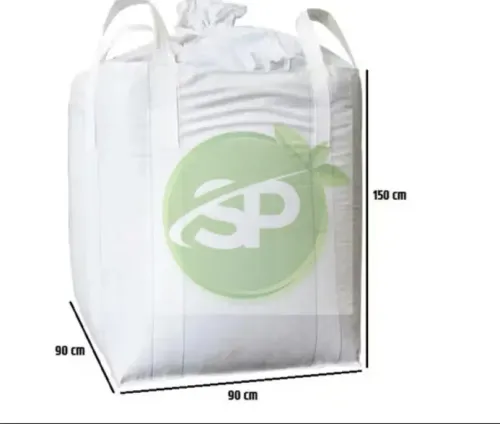
- If the bag is an FIBC, specify safe working load, safety factor, filling design, discharge design and test evidence against ISO 21898. An industrial bulk container requires these controls; calling it promotional does not replace them.
- State whether the bag must remain usable after rain, condensation, damp products or wash exposure. Paper, jute and fabric need different limits and storage controls.
Prepare artwork that remains readable on paper and fabric
1. Set the artwork specification before quoting branded business bags: final logo width and height, print position, bleed, minimum text size, colour contrast, and a safe margin from folds, gussets, creases, handles and handle reinforcements.
Keep large dark solids, fine reverse text and critical details away from these zones; movement during production can distort registration or close small lettering.
2. Request vector artwork in AI, EPS or PDF format, with fonts converted to outlines. Identify Pantone references or CMYK values, then ask whether production uses screen printing, flexographic printing, offset printing, transfer printing or another process.
Ink absorbs and spreads differently on brown kraft, white kraft, coated paper, woven fabric and textured jute, so the same file will not produce the same colour or edge.
3. For paper shopping bags for branding, require a proof showing print coverage, both-side registration, handle colour and the actual substrate, including whether it is coated or uncoated.
Approve a physical colour sample or sealed pre-production sample before the full run: a digital proof cannot reveal substrate absorption, surface texture, creasing, or the way ink looks beside the handle and folded top edge. Record approved tolerances for logo position, size and colour with the sample.
Compare supplier quotations, approve samples and calculate the order
Before placing an order, ask a promotional bag supplier in Nagpur for a sealed production sample and written limits for every feature that affects fit or branding.
| Item | Ask for | Why it matters |
|---|---|---|
| Material | GSM or fabric weight, fibre composition and moisture limits | “Paper” and “jute” do not define carrying performance |
| Construction | Finished width, height, gusset, handle length, attachment, reinforcement and stitching density | Prevents weak handles and unsuitable capacity |
| Printing | Print method, colour proof, logo position and colour tolerance | Keeps artwork away from folds and stops shade disputes |
| Supply | Minimum order quantity, production lead time and packing method | Exposes storage and delivery risks |
| Quality | Filled-load carry test and written replacement policy for defects | Paper bags often fail at the handle, folded top edge or bottom fold |
| Quantity | Packed-quantity tolerance | Prevents a short shipment |
Require the quotation to separate delivered price from tooling, plates or screens, sampling, packing, freight, taxes and minimum-order charges. An ex-factory unit rate can become the costliest option after setup and transport.
Calculate each size separately:
- List the bags needed for each product size, event or retail period.
- Add documented allowances for damage, staff use, samples and late demand.
- Keep those allowances separate; do not apply one universal percentage.
Ask for evidence supporting recycled content, recyclable, compostable or biodegradable claims. These describe different properties. For FSC-labelled material, request an authorised chain-of-custody link.
SP Jute Craft Enterprises is one local option to compare on specifications, samples and delivered cost, not unit price alone.
Related products
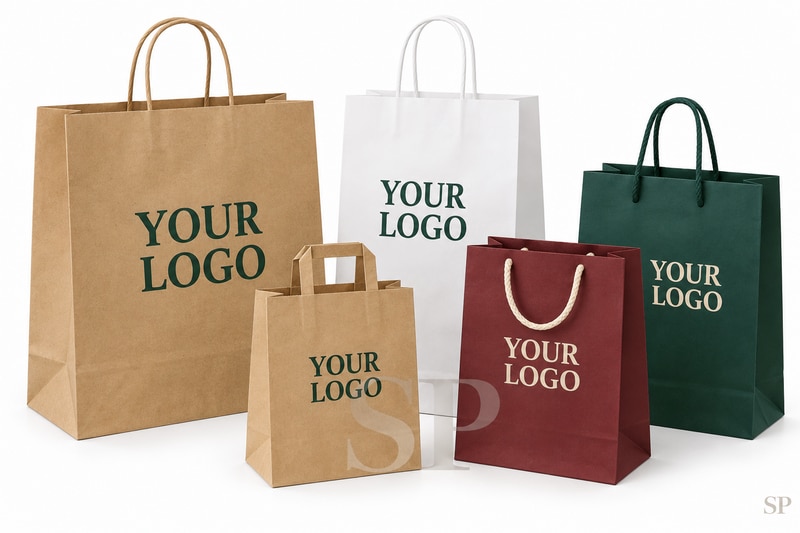 | Shopping & Promotional Bags 🛍️🌿 **Paper Shopping Bags – Stylish, Practical & Brand-Friendly** Upgrade your business packaging with **premium paper shopping bags from SP Jute... View product → |
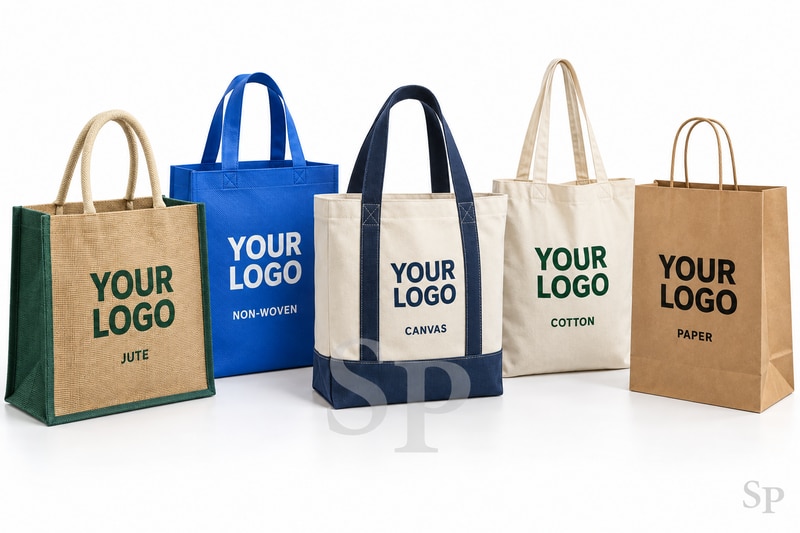 | Shopping & Promotional Bags 🎯👜 **Customized Promotional Bags – Put Your Brand in Every Customer’s Hands!** Make your brand more visible with **customized promotional bags from... View product → |
Frequently asked questions
How do you choose between custom promotional bags and paper shopping bags?
Choose paper for a controlled, one-time retail carryout. Choose jute, cotton or canvas when recipients will reuse the bag for shopping, commuting or office visits.
How should you match a bag to the product inside?
Set the bag’s material, dimensions, gusset, handle style and construction against the product’s weight, shape, sharp edges, moisture exposure and required protection.
What should a promotional bag performance specification include?
State finished dimensions, material, fabric or paper weight, handle construction, stitching or bonding, print area, load requirement and the pass or fail test for the finished bag.
How can you keep branding readable on paper and fabric bags?
Use strong contrast, size the logo for the actual print area, check fine lettering at final scale and approve artwork on a physical sample made from the chosen material.
How should you compare supplier quotations for branded business bags?
Compare the same dimensions, material weight, construction, printing process, packaging, delivery terms, taxes, sample charges and minimum order quantity before selecting a supplier.
Related products
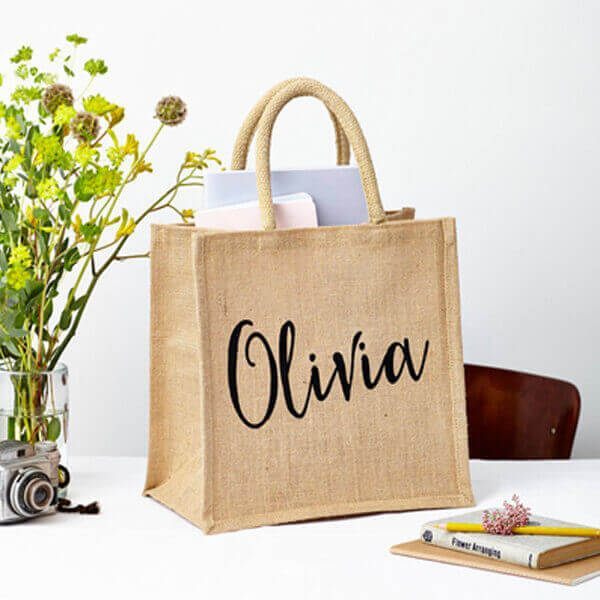 | Shopping & Promotional Bags 🌿 **Jute Promotional Bags – Promote Your Brand Sustainably!** Make your brand stand out with **eco-friendly jute promotional bags** from **SP Jute... View product → |
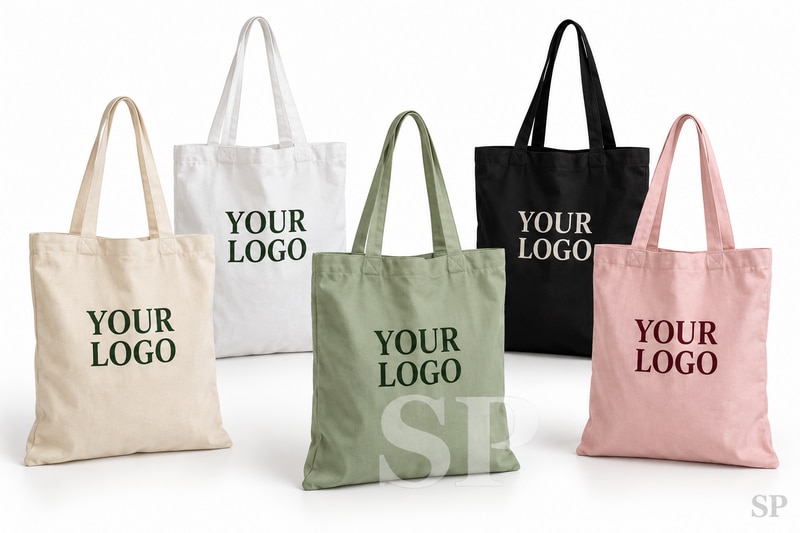 | Shopping & Promotional Bags 👜🌿 **Cotton Tote Bags – Reusable, Stylish & Perfect for Your Brand** Looking for a practical and eco-conscious alternative to plastic shopping... View product → |
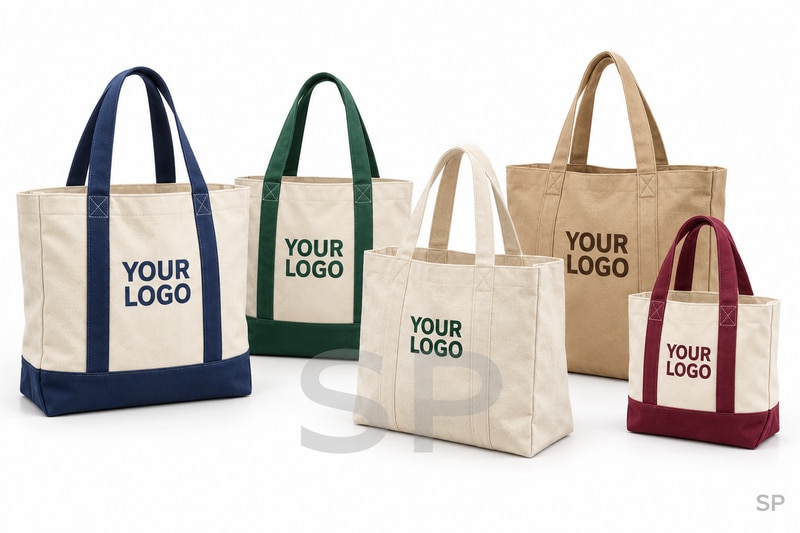 | Shopping & Promotional Bags 🛍️🌿 **Canvas Shopping Bags – Strong, Reusable & Brand-Friendly** Choose a durable and stylish alternative to disposable shopping bags with **canvas... View product → |
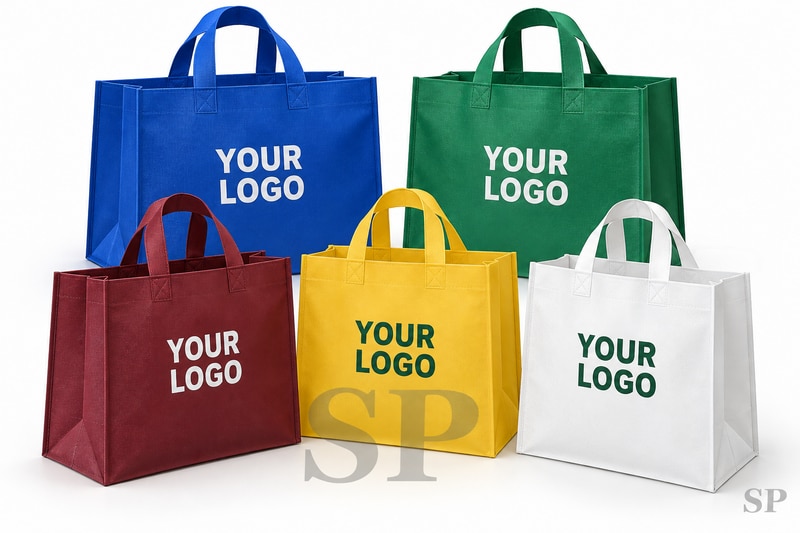 | Shopping & Promotional Bags 🛍️📦 **Non Woven Box Bags – Strong, Spacious & Perfect for Branding** Give your customers convenient and attractive packaging with **Non Woven Box... View product → |
Keywords