Choosing between juco and 100% jute requires more than comparing two material names: “juco” is a trade term, while performance depends on blend ratio, GSM, weave, seams and handling conditions. By the end, you will have a practical way to match fabric to the load, test samples and write a purchase specification that reduces failure risk.
Key takeaways
- Confirm juco’s jute-to-cotton ratio, GSM, yarn strength and weave.
- Define load, handling, moisture exposure and reuse cycles before choosing fabric.
- Test filled samples for seam failure, abrasion, tearing and handle damage.
- Put fabric composition, construction and acceptance tests on the purchase order.
Juco and 100% jute: which fabric handles your packaging job better?
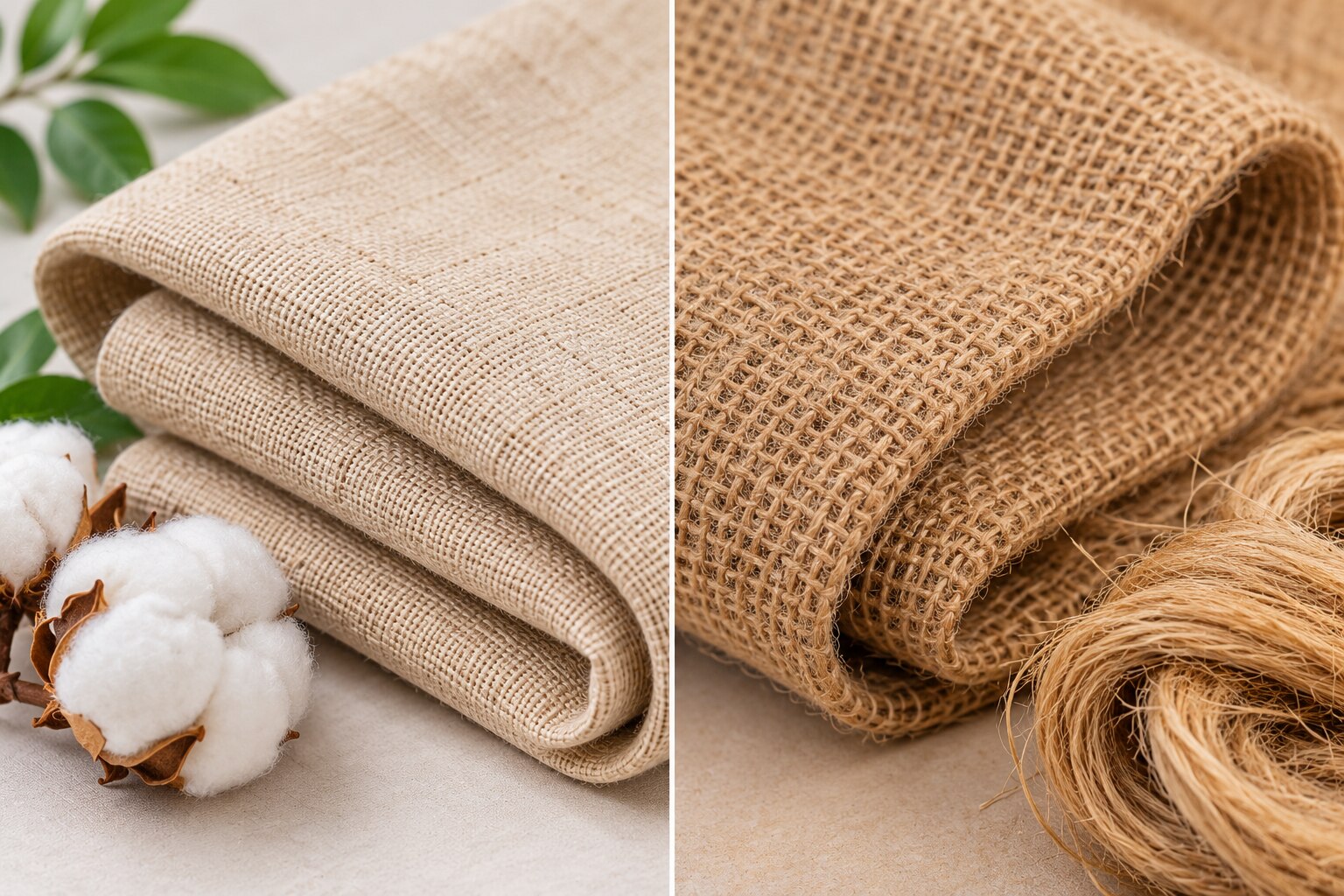
Neither fabric is automatically stronger. Juco is a trade term for a jute–cotton blend, so its jute-to-cotton ratio, GSM, yarn strength and weave must be confirmed before making a juco versus jute packaging decision.
| Fabric | Strength and tearing | Abrasion and handling | Stiffness, folding and appearance |
|---|---|---|---|
| 100% jute | Firm and capable of strong load performance when tightly woven; coarse yarns can resist tearing, but cuts may spread if edges are unfinished | Handles rough contact well, though surface fibres can wear and shed | Stiff, rough and rustic; holds shape but folds sharply and less easily |
| Juco | Cotton does not automatically increase strength; performance depends heavily on blend ratio, GSM, weave and seams | Softer surface improves handling and sewing, but a loose decorative weave can abrade or develop yarn slippage sooner | Softer, more flexible and easier to fold; accepts detailed printing and gives a smoother retail or gifting appearance |
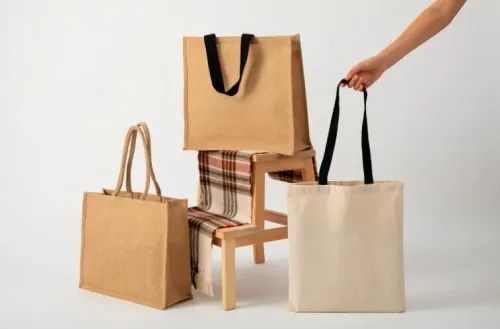
The jute cotton fabric benefits include softer drape, better foldability, easier stitching and more receptive printing. Those advantages suit reusable totes and corporate gifting bags, while tightly woven jute suits firm packages and coarse industrial presentation.
Specify hemming, overlocking, folded seams or binding after cutting, because both fabrics can fray. Compare filled-bag load tests rather than fibre names; ISO 13934-1 tensile and ISO 13937-2 tear results make supplier claims easier to check.
Define durability before choosing juco fabric for bags
Durability means surviving the specified load, handling and environment without a failed seam, torn panel, broken handle or unusable shape. Define the job before choosing juco fabric for bags: product weight, bag dimensions, drop exposure, stacking height, rubbing, moisture or dust contact, and expected reuse cycles.
A cotton blend improves softness, drape, folding and print reception, but it does not automatically increase strength.
Specify and test:
- Fabric GSM, weave density, warp and weft tensile strength, tear strength, seam strength and allowable GSM variation.
- Handle load separately from body load; reinforce the handle attachment and use folded seams, binding or overlocking where repeated handling could cause fraying or yarn slippage.
- Use a liner, coating, lamination or inner bag for water, oil, fertilizer dust, fine powders or vapour. Uncoated jute and juco are not barriers.
- For foodgrain or regulated commodities, match dimensions, fabric construction, stitching, mass and contamination controls to the current applicable Indian Standard.
| Option | Best fit | Limitation |
|---|---|---|
| Juco | Retail, promotional and corporate-gifting bags needing softer handling, easier folding and sharper printing | Open decorative weaves can fray and are unsuitable for heavy loading without reinforcement |
| 100% jute | Rigid, textured bags and rougher handling where natural stiffness helps | Rougher feel, less drape and no liquid barrier |
| Laminated jute | Packaging needing moisture or dust resistance | Added cost, reduced breathability and more difficult recycling |
| PP woven sacks | Heavy commodities, stacking and repeated rough loading | Less premium appearance and weaker brand-gifting appeal |
Compare samples with tests that reveal real packaging failure
Use identical bag dimensions, seams, handles and fabric areas before comparing juco versus jute packaging. Record GSM, blend ratio by mass, weave density and fabric thickness; “juco” alone is not a specification, and the jute cotton fabric benefits of softness and foldability do not prove higher load capacity.
| Test | How to compare | Failure revealed |
|---|---|---|
| Fabric data | Measure GSM and thickness; obtain the jute/cotton ratio and yarn details | A lighter or loosely woven sample may stretch, gape or deform |
| Tensile strength | Request ISO 13934-1 results in both warp and weft directions | Low strength predicts panel rupture during lifting |
| Tear resistance | Request ISO 13937-2 results, then inspect cuts at seams and handles | A small nick can run into a long tear |
| Filled-bag lift | Fill each bag to the intended product weight, lift by its handles repeatedly, and inspect stitching | Handle pull-out, seam opening, fabric stretch or bottom failure |
| Abrasion | Rub loaded samples against the actual trolley, floor or carton surfaces for the planned handling count | Surface thinning, yarn breakage and printed-layer loss |
| Moisture and reuse | Expose bags to humid storage, reject damp or odorous stock, then refill and lift for the planned reuse cycles | Shrinkage, mildew, loss of shape and weakened seams |
Check cut edges after every trial. Fraying and yarn slippage require folded seams, overlocking, binding or a sealed edge. Decorative open-weave juco is not a substitute for tightly woven industrial fabric. Store approved stock off the floor and away from walls; moisture-sensitive jute and cotton can develop mildew before dispatch.
Put the material, construction and test requirements on the order
Put a measurable specification on the purchase order, not simply “juco” or “heavy-duty jute.” Juco is a trade term: require the jute-to-cotton blend ratio by mass, GSM, yarn count, weave, colour, finish and fabric data sheet from the juco fabric supplier in Nagpur.
- State finished bag length, width, gusset, tolerance, empty-bag mass and intended filled load.
- Specify fabric construction, handle length and width, attachment method, seam type, stitch density, folded or overlocked edges, and reinforcement at handles and corners.
- Require a pre-production sample made with the approved fabric, thread and construction. Keep one signed reference sample and obtain the supplier’s batch identification.
- Request tensile results to ISO 13934-1 and tear results to ISO 13937-2, identifying fabric direction, specimen conditioning and test values.
- Approve a filled-bag test using your actual product: lift it by the handles, stack it to the planned height, drop it from the expected handling height and rub it against likely contact surfaces. Record seam opening, handle stretch, fabric tearing and product loss.
- For foodgrain or regulated commodities, name the applicable current Indian Standard and check its dimensions, fabric construction, stitching, mass and contamination requirements. Do not treat a shopping-bag specification as foodgrain-sack compliance.
Store approved stock off the floor, away from walls and in ventilated conditions. Reject wet or visibly damp bags before dispatch; jute and cotton absorb moisture, which can cause odour, mildew and dimensional change.
Use a Nagpur sourcing checklist before approving bulk production
A signed sample is not enough: “juco” is a trade term, not a fixed specification. Before approving a juco fabric supplier in Nagpur, record the jute-to-cotton ratio by mass, GSM, yarn count, weave, finish, colour, bag dimensions, handle construction and seam type.
1. Request a fabric data sheet, production-lot identification and a sealed metre of the approved cloth. Mark the sample with the supplier, date, GSM and purchase-order number.
2. Test the sample in its intended bag construction. Check filled-bag weight, handle load, seam strength, drop performance, abrasion and folding. For monsoon exposure or outdoor transport, compare conditioned and wet samples for dimensional change, colour bleeding, odor and visible mildew.
3. Approve a production-representative print strike-off. A smooth sample may have received special calendaring or preparation that the delivered fabric lacks; inspect print coverage, registration, rub resistance and stitch appearance.
4. Put rejection limits on the purchase order: GSM tolerance, blend ratio, dimensions, colour reference, seam allowance, handle length, allowable defects and packaging moisture condition. Ask for the lot number on every delivery.
5. On arrival, sample bags from multiple bundles. Compare fabric weight, measurements, weave, print, stitching, odour and handle attachment against the signed sample; photograph discrepancies before unpacking the full consignment.
Whether you assess SP Jute Craft Enterprises or another supplier, keep one sealed reference bag and retain the inspection record. Store accepted stock off the floor, away from walls, and reject bags that arrive damp or smell musty.
Related products
 | JUTE FABRICS Blended Fabric (Jute + Cotton / Jute + PP) IN NAGPUR GET BEST DEAL ON BULK ORDERS OF Blended Fabric (Jute + Cotton / Jute + PP) IN NAGPUR. View product → |
 | JUTE FABRICS Laminated Jute Fabric IN NAGPUR Fabrics Variety 9x9 10x10 11x12 13x13 14x15 o Plastic (PP) lamination ke sath o Water & moisture resistant View product → |
Frequently asked questions
What is the difference between juco fabric and 100% jute fabric?
Juco is a trade term for a jute–cotton blend, while 100% jute fabric uses jute throughout. Compare the actual fibre ratio, GSM, yarn strength and weave rather than relying on the material name.
How do you define durability for juco fabric bags?
Specify the working load, bag dimensions, carrying method, handling frequency, moisture exposure and required reuse cycles. Durability depends on those conditions as well as fabric strength.
What should you test before approving bulk packaging production?
Compare filled samples for seam failure, tearing, abrasion, handle damage and deformation. Use the same load and handling conditions for both juco and 100% jute samples.
What should a Nagpur packaging order specify?
State the fibre composition, GSM, yarn and weave construction, dimensions, stitching details, handles, tolerances and acceptance tests on the purchase order.
Related product
 | JUTE FABRICS Sacking Cloth (Heavy Fabric) IN NAGPUR Weight: 12–20 oz o Strong & coarse weave o Used for: food grains, sugar, cement, fertilizer o Ye sabse jyada... View product → |
Keywords